17 Orchard Lane
The Radleys17 Orchard Lane is the Radley family home and the deceptively ordinary setting for the novel’s domestic and supernatural conflicts. Its quiet, respectable appearance makes it seem safely human; the rooms and garden within it instead hold the Radleys’ secrets, crises, and final confrontation.
Setting and First Impressions
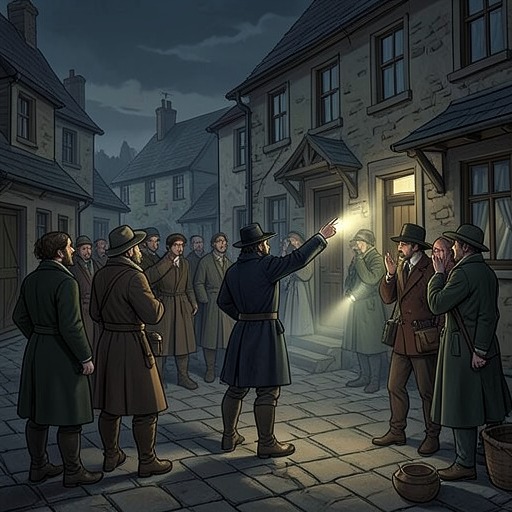
The house stands on a quiet stretch of tree-shaded lanes, particularly silent at night. The narration presents that stillness as an uneasy impression rather than an obvious warning: a visitor might notice a light, feel that something is wrong, or sense that nature itself has grown unusually quiet, without being able to explain why. The house’s setting therefore works through a contrast between what can be perceived and what can be understood. Its atmosphere suggests danger, but offers no straightforward proof of it.
The ordinary details outside reinforce that uncertainty. A moderately expensive car is parked by a pleasant-looking house, giving the property the appearance of a comfortable home whose occupants pose no threat to anyone beyond it. That impression is false: 17 Orchard Lane is where the Radleys live, and the family’s efforts to appear normal conceal that they are Vampires. The address is not an isolated lair presented as openly sinister. It is a recognizably domestic home whose normality functions as a façade.
Rooms of Family Life
The house’s rooms register the difference between outward composure and the family’s private strain. At three on Friday morning, a light in the spare bedroom belongs to Rowan, the elder Radley child. He is awake despite taking six times the recommended dose of Night Nurse. His sleeplessness is familiar rather than exceptional: even on a better night he may manage only about two hours, and on this night a rash and the breeze against the window compound his distress. The bedroom, with Byron’s Collected Poems set aside nearby, is a place where the household’s quiet does not mean rest.
The landing connects that solitary scene to the rest of the home. Rowan hears someone walking along it toward the spare room, not toward the toilet. The small distinction makes the house feel inhabited and watchful: an ordinary sound carries weight because Rowan is already awake, alert to the movements of others. Across the novel, domestic spaces repeatedly become places where family members encounter consequences they cannot keep outside.
That pattern is especially clear when Rowan waits by the tumble dryer while Helen attends to Clara in the downstairs bathroom. Clara has returned with Helen appearing to care for her, while Rowan, confronted by the change in his sister, says he is confused. The bathroom and laundry area are not merely background rooms; they locate a family emergency inside the routines of an ordinary house. Soon after, Peter comes home, shifting the scene again from private care to the next phase of the crisis.
A Home Under Observation
The address also becomes a point of attention for people outside the family. While watching from nearby, Alison Glenny and Geoff Hodge see Rowan leave number seventeen and head toward the camper van. Their observation identifies the house as both a home and a site under surveillance. The conversation that follows establishes that Rowan is a Vampire, though Alison qualifies the description as technically true. From outside, the Radleys’ ordinary address is now legible as part of a hidden world that their neighbors and observers are trying to understand.
This view from the watchers’ position contrasts with the house’s earlier presentation. A passerby might see an unremarkable residence and car; Alison and Geoff see a teenager leaving the house whose identity makes the location consequential. The address has not visibly changed, but what people know about it has. In that sense, the same threshold can mark the boundary between the family’s attempted privacy and the scrutiny brought on by events beyond the house.
The House at the Point of Crisis
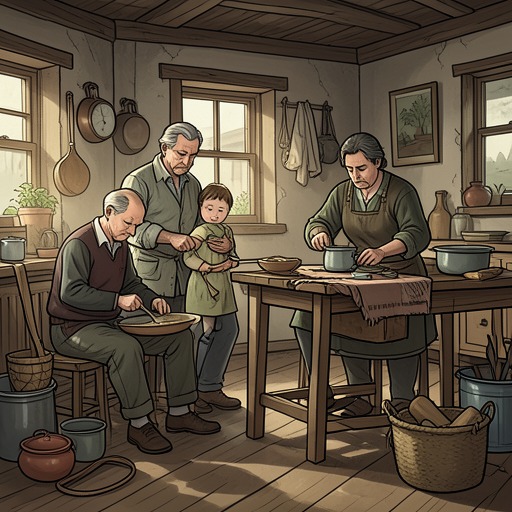
In the kitchen, Helen slices a whole wheat loaf and prepares sandwiches for Peter’s lunch. The repetitive task gives her something to do while she faces the impossible demand Alison Glenny has placed on her. Helen is absorbed in the decision when Will appears in the room and makes a joke about the bread and the prayer for daily bread. The scene brings the family’s ordinary domestic habits into direct contact with an extraordinary threat: lunch preparation continues even as Helen is weighing what she has been told she must do.
Will later arrives back at number seventeen carrying a knife. At the door, he presses the bell four times in quick succession. The threshold, ordinarily a point of entry into the family home, becomes the start of a new emergency. He takes Helen away from the house, and Clara realizes what has happened. From her bedroom window, she watches them disappear into the night. She then reaches for the empty VB bottle beneath her bed, an object that connects the crisis outside to the vulnerabilities and choices inside the house.
The action moves from the doorway and bedroom window to the roof, garden, and pond. Rowan confronts Will above the house and drives their descent toward the pond, where he tries to hold his father under the water. Clara and Helen return to the garden as Rowan takes the axe from the pond and kills Will. In the aftermath, Rowan remains beside the water for a moment before remembering that his mother and sister are there. The family’s private crisis has become a witnessed ending on its own grounds.
Narrative Significance
17 Orchard Lane gathers the novel’s opposing ideas of home into one setting. It shelters family routines, private suffering, and efforts to pass as ordinary, yet it also becomes a place where those efforts repeatedly fail. The spare bedroom’s sleeplessness, the bathroom’s urgent care, the kitchen’s unfinished domestic work, and the garden’s final confrontation give the family’s hidden life a physical geography without making the house itself openly monstrous.
The address also shapes the story’s movement between concealment and exposure. At first, the quiet lane and respectable exterior make the Radleys seem unremarkable; later, observers watch who leaves the house, and Will’s return turns its entrance into the beginning of an abduction. The final struggle carries the conflict through the home’s upper levels and into the garden pond, where Rowan ends Will’s attack. The setting’s decisive significance lies in that reversal: the place built to support the appearance of a normal family becomes the ground on which the truth of the family’s conflict can no longer be hidden.